

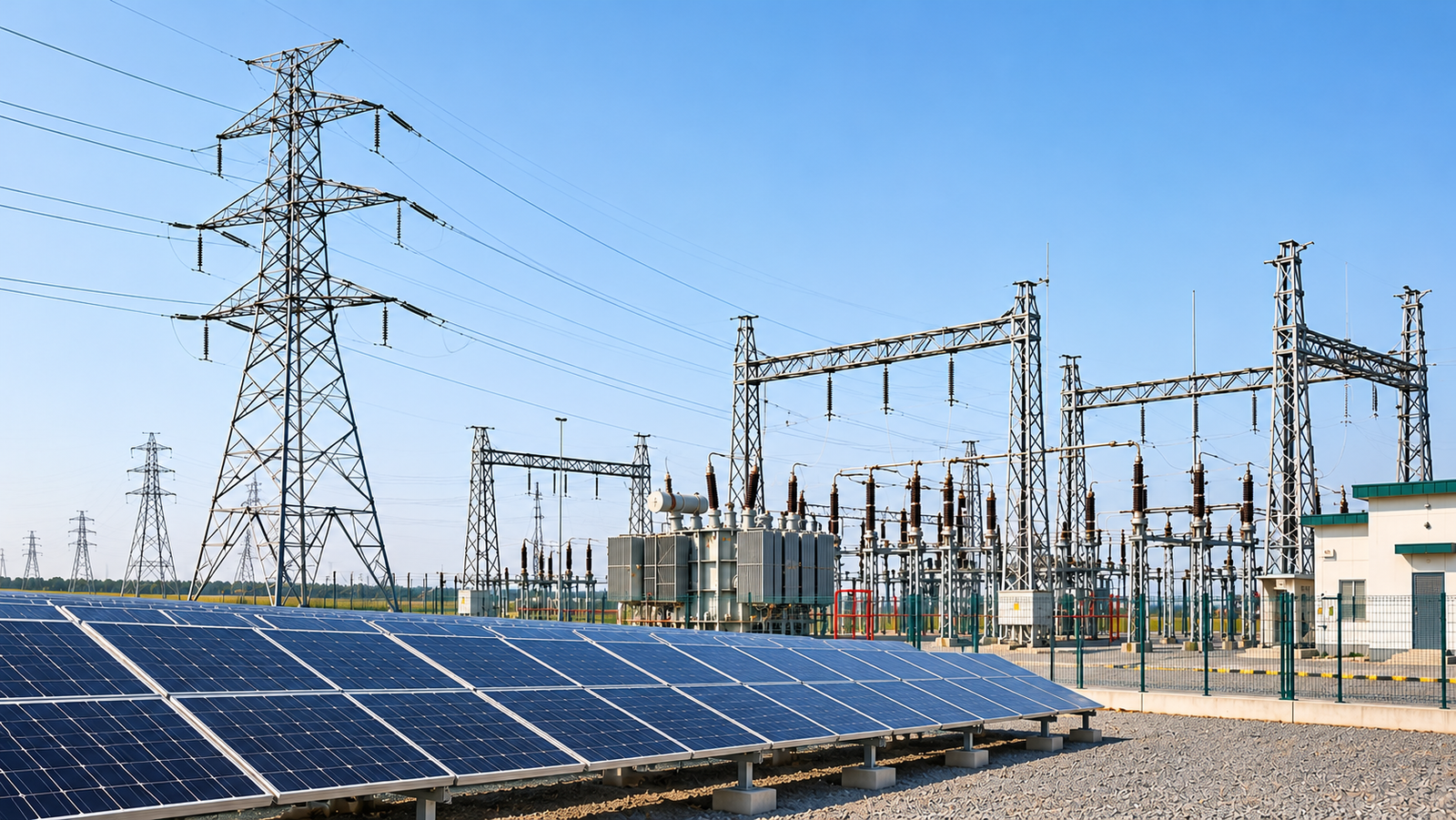
India has made considerable progress in expanding its solar and wind capacity. But building renewable energy projects is only one part of the job. The electricity generated also needs a reliable network to reach the places where it is needed.
This is where transmission infrastructure and energy storage become important. With more renewable energy projects coming up across the country, strengthening the existing grid is becoming a priority.
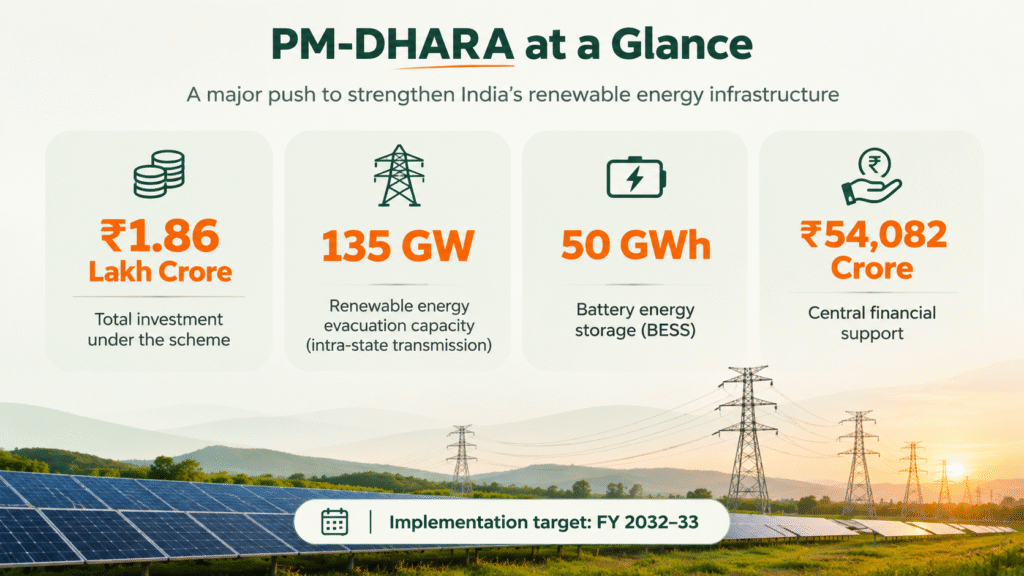
Taking this forward, the Union Cabinet approved the PM-DHARA (PM-Developing Harmonized and Accelerated Renewable-energy Access) Scheme on 30 September 2026. With an investment of ₹1.86 lakh crore, the scheme focuses on strengthening state-level transmission networks and expanding battery energy storage capacity.
A Closer Look at the Investment
The scheme focuses on two areas that will play an important role in supporting India’s growing renewable energy capacity : transmission infrastructure and battery storage.
Some of its key provisions include:
- 135 GW of renewable energy evacuation capacity: Strengthening intra-state transmission networks to accommodate more renewable power.
- 50 GWh of battery energy storage: Setting up Battery Energy Storage Systems (BESS) at renewable energy generation sites and other important locations.
- ₹1.86 lakh crore in total outlay: Covering investments in transmission infrastructure and battery storage.
- ₹54,082 crore in central financial support: Helping states take up the required infrastructure development.
The scheme is targeted for implementation by FY 2032–33, with State Transmission Utilities responsible for carrying out the work.
What Does This Mean for Solar Developers?
For solar developers, getting a project commissioned is not just about installing panels and completing the plant. Having the necessary transmission infrastructure in place is equally important.
As renewable energy capacity grows, state transmission networks will need to keep pace. The proposed investment under PM-DHARA could help address some of the infrastructure constraints that developers face while connecting new projects to the grid.
For EPC companies, this also means a growing focus on the infrastructure surrounding renewable energy projects, alongside the generation plant itself.
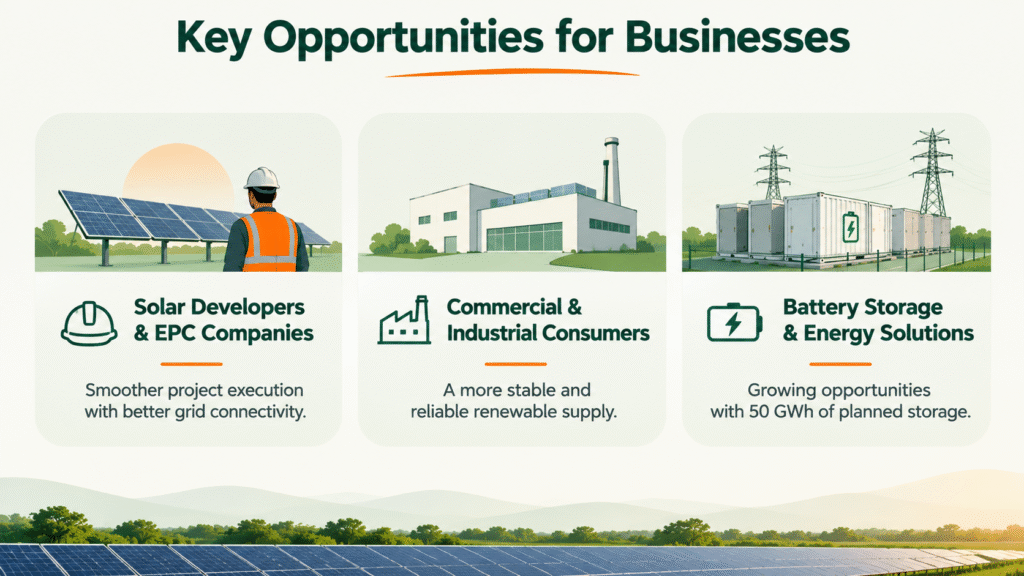
The scheme’s 50 GWh storage target is another important development for the sector. As more solar and wind projects come online, having storage capacity becomes increasingly useful. It allows surplus power to be stored and used when generation is lower or demand is higher. For developers, this also brings battery storage further into the conversation when planning renewable energy projects.
What This Could Mean for Businesses
A stronger transmission network can make a real difference to how renewable energy projects are developed and used. For businesses, this is particularly relevant as more companies look at solar power to meet their electricity requirements and manage long-term energy costs.
For solar developers, better transmission infrastructure could make it easier to connect new projects to the grid, particularly in areas where existing networks are already stretched. This could also support project development in regions with growing renewable energy potential, creating more room for solar installations and associated EPC work.
The development is equally relevant for commercial and industrial consumers. Businesses investing in rooftop solar, captive projects or power purchase agreements need a grid that can accommodate the power being generated and deliver it where it is required. Improvements in transmission capacity could help support these arrangements as renewable energy adoption grows.
Storage is another part of this development worth watching. With 50 GWh of battery storage planned under the scheme, BESS is likely to become an increasingly important part of the renewable energy conversation. It could create opportunities to combine solar generation with storage, giving businesses more flexibility in how they manage their power requirements.
The benefits will take time to materialise and will depend on how the scheme is implemented across states. However, the investment is an encouraging sign for businesses looking to increase their use of renewable energy. It addresses a part of the energy infrastructure that will be increasingly important as more projects come online.
What Happens Next?
The focus now shifts to implementation. How the funds are distributed across states, where the transmission infrastructure is developed and how the battery storage projects are rolled out will determine the scheme’s impact on the ground.
For renewable energy developers and businesses, these developments will be worth following as new projects are planned and commissioned.
PM-DHARA puts an important part of India’s energy transition in focus: building the infrastructure needed to support the renewable energy capacity the country is adding. As solar and wind continue to expand, having the network and storage to support them will matter just as much.